
Primer is not a mandatory extra coat on every painting project. It is also not something to skip automatically because a finish paint says “paint and primer.” The useful question is what the surface needs the coating system to do: seal porosity, improve adhesion, block a stain, or provide a consistent base.
A clean, sound painted wall is different from fresh drywall or a water-stained ceiling. Matching the primer to the problem is how you avoid doing unnecessary work in one room and missing an important step in another.
1. New Drywall Needs a Consistent Base
New drywall includes paper faces, joint compound, and sanded areas that can absorb paint differently. Applying finish paint without an appropriate sealer can leave uneven sheen and visible transitions, even if the color seems to cover. Dust left from sanding creates another obstacle to adhesion.
The surface should be ready before priming: repairs finished, compound dry, sanding complete, and dust removed. A drywall primer or other manufacturer-approved system helps equalize absorption. The specific product depends on the surface and the intended finish, rather than simply using whatever primer happens to be left from another job.
2. Wall Repairs Often Need Spot Priming
A few filled nail holes or repaired dents do not always call for priming every wall. They do need attention because patching material can behave differently from the surrounding painted surface. Without suitable preparation and primer, the repair may remain visible as a dull or shiny spot after painting.
Spot priming seals the repaired area where the selected system requires it. Larger patches, widespread repairs, or strongly uneven porosity may justify a broader primer coat. At Central Iowa Painting, filling holes, repairing minor wall damage, sanding, and spot priming are part of the preparation conversation—not details to discover only after finish paint is applied.
3. Bare Wood Needs the Right Primer
Unfinished wood and exposed areas on previously painted trim can absorb coatings differently. Some wood species also contain tannins that may discolor a finish. Knots, old stains, and the condition of the surrounding coating affect the choice of primer.
An appropriate wood or stain-blocking primer can address those needs before the finish goes on. Exterior wood also needs to be sound and sufficiently dry. Primer cannot turn soft, decayed, or water-damaged material into a suitable painting surface, so necessary repairs and moisture corrections come first.
4. Stains Need More Than Extra Finish Paint
Water marks, smoke residue, and other discoloration can come back through a new finish if the underlying issue is not addressed. Adding another ordinary wall coat may not stop that migration. Different stains call for different stain-blocking products and sometimes a test area.
Correct the source of a leak or moisture problem, clean as appropriate, and let the surface dry before choosing a primer. Persistent growth or damaged building material may need further evaluation. Covering the visible mark without dealing with its cause can leave a room looking better temporarily while the real problem continues.
5. Glossy and Difficult Surfaces Need an Adhesion Plan
Smooth trim, some older coatings, and other slick surfaces can be difficult for a new finish to grip. Cleaning and appropriate scuff sanding may be necessary, followed by a compatible bonding primer when the coating system calls for it. An adhesion test is useful when the existing finish is uncertain.
Do not assume primer will glue down peeling paint or neutralize grease. Loose coating needs removal, contaminants need cleaning, and the remaining surface must be sound. For older homes, discuss lead-safe practices before disturbing painted surfaces. Preparation methods should be chosen with both the substrate and the existing coating in mind.
6. Major Color Changes Can Benefit From Primer
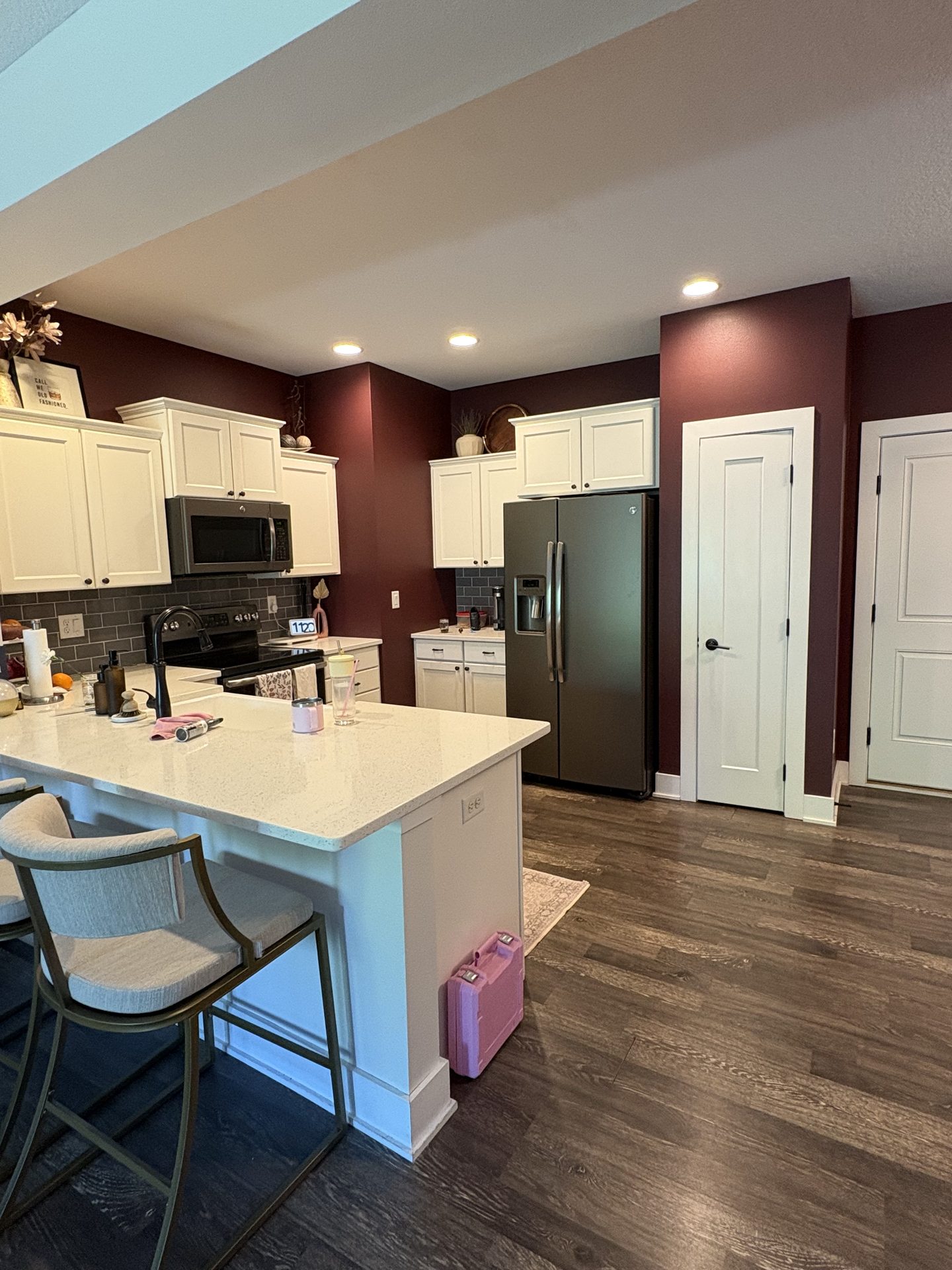
Changing a deep brown wall to a soft white or covering an uneven mix of old colors may be easier with an appropriate primer base. Some finish colors perform best over a particular tinted primer recommended by the manufacturer. That recommendation is about the whole system, not a universal rule that every dark wall needs the same treatment.
Primer is not a guaranteed shortcut to one finish coat. Coverage, the selected color, and the product’s application requirements still matter. Ask how the painter plans to achieve a uniform finished color and sheen rather than focusing only on a promised minimum number of trips around the room.
7. Sound Painted Walls May Not Need Full Priming
If a wall is clean, dry, firmly bonded, and compatible with the new paint, a full primer coat may not add much value. Minor repairs can often be handled locally while the sound existing finish receives the specified repaint system. The condition of the wall is the deciding factor.
That is where “paint and primer” wording can cause confusion. It does not mean a wall paint replaces every drywall sealer, bonding primer, or stain blocker. Read the product instructions and evaluate the surface. A quality finish paint still depends on the right preparation and any specialized primer the job requires.
8. Ask What the Primer Is Solving
A clear estimate should explain primer in plain language. Is it sealing repairs, blocking a stain, helping adhesion, or preparing bare material? If the answer is vague, ask for more detail. Knowing the reason makes it easier to compare proposals that specify different steps.
CIP primarily uses top-of-the-line Sherwin-Williams products, and homeowners can discuss a preferred brand. Product quality matters, but matching the product to the surface matters just as much. The goal is not to use the most primer possible; it is to build the right foundation for an even, durable finish.
Get Advice for Your Walls and Trim
Central Iowa Painting is based in Ankeny and serves Des Moines, Ankeny, and surrounding Central Iowa communities. Request a free estimate to review your surfaces, repairs, primer needs, and finish options before your painting project begins.
Call (515) 207-0165 or email contact@centraliowapainting.com to request a free estimate. Hours: Monday–Friday, 8am–5pm; weekends by appointment.